What Is Marbling in Beef and What Does Good Marbling Look Like?

The thin white flecks running through a steak aren't connective tissue or simply excess fat. They're marbling, and they can tell you quite a bit about how a piece of beef will cook and eat before it ever reaches the pan.
Marbling is one of the characteristics used to grade beef in Canada, but there is more to it than looking for the steak with the most white in it. The amount, size and distribution of marbling all matter.
What Is Marbling?
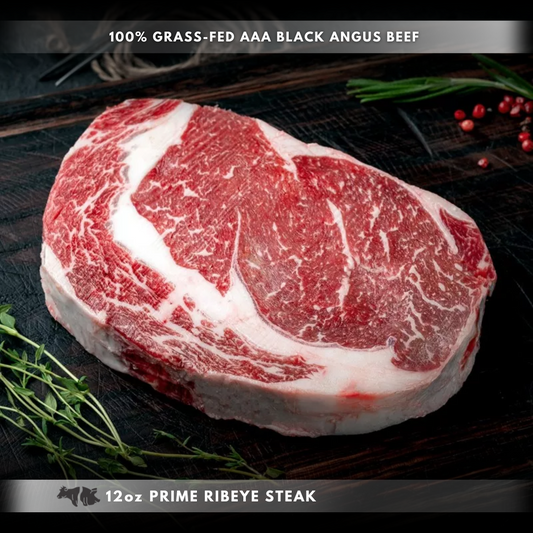
Marbling is intramuscular fat, meaning fat found within the muscle itself.
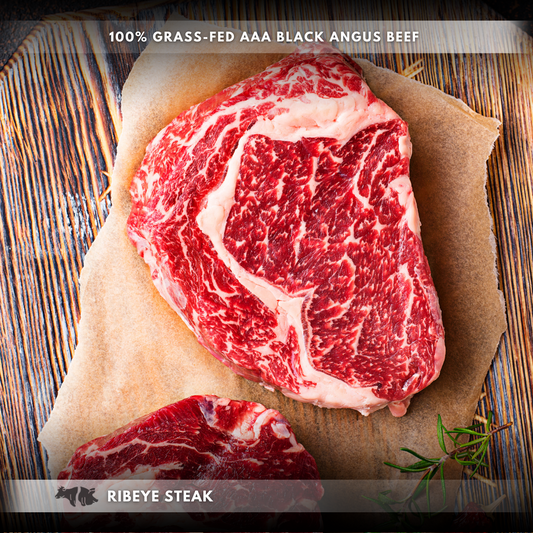
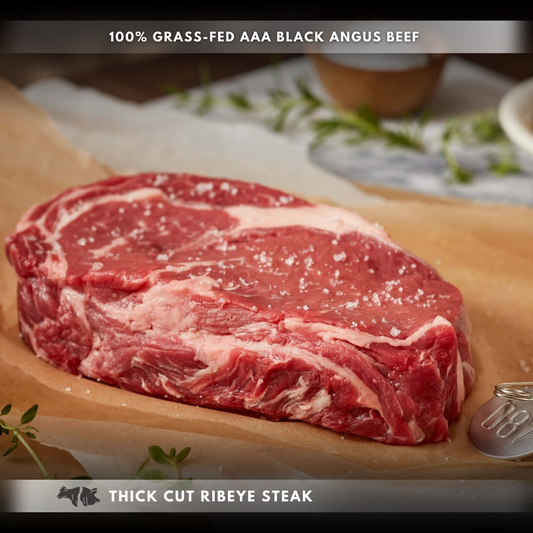
It appears as white flecks, streaks or fine lines running through the red meat. This is different from the larger layer of fat you might see around the outside edge of a steak.
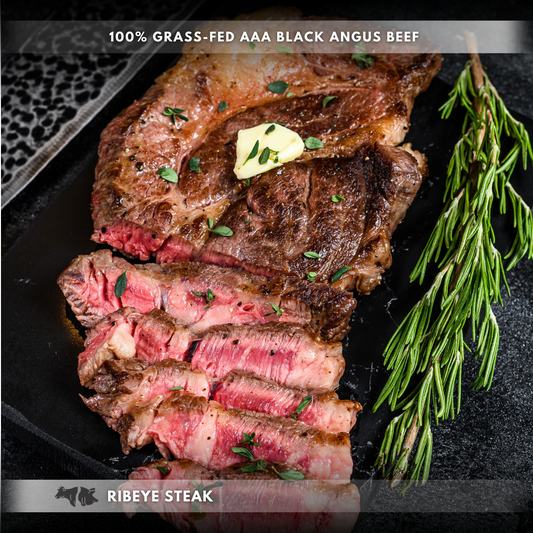
When a well-marbled steak cooks, some of that intramuscular fat renders within the meat. This contributes to the juiciness, tenderness and rich flavour commonly associated with cuts such as ribeye.
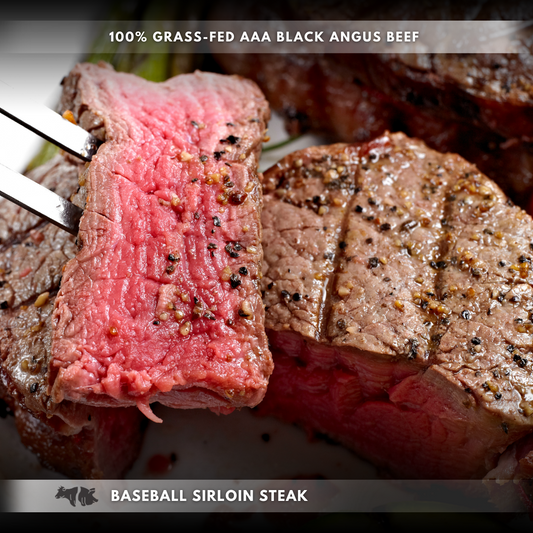
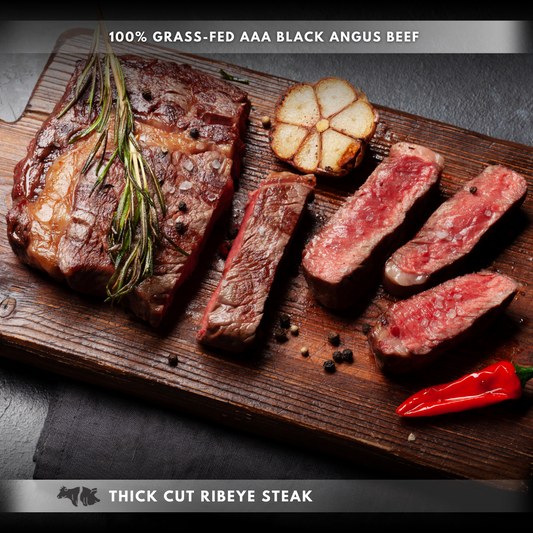
Different cuts naturally have different amounts of marbling. A ribeye, for example, will generally have more visible fat than a tenderloin. That doesn't make one cut better than the other. Tenderloin is prized for its tenderness despite being comparatively lean, while marbling is a major part of the appeal of a ribeye.
What Does Good Marbling Look Like?
When comparing steaks of the same cut, look at how the marbling is distributed, not just how much fat you can see.
Fine flecks and thin streaks of white fat spread throughout the muscle are a good sign. Ideally, the marbling should be reasonably consistent across the steak rather than concentrated entirely in one area.
Large pieces of fat between muscles are different. They may add flavour during cooking, but they aren't the intramuscular marbling used to assess a steak.
So a steak with one large strip of fat isn't necessarily more marbled than a steak covered in much smaller white flecks.
Can a Steak Have Too Much Marbling?
That depends on what you're looking for.
Higher levels of marbling generally produce a richer eating experience, but that doesn't automatically make them preferable for every meal or every person.
Wagyu demonstrates this particularly well. At higher Beef Marbling Scores, fat can become extremely abundant throughout the meat. The resulting steak is much richer than a conventional steak and is often enjoyed in smaller portions.
A steak with moderate marbling can offer a more traditional balance between beef flavour, tenderness and richness.
Rather than thinking of marbling as good or bad, it is more useful to think of it as one of the characteristics that defines how a particular steak will eat.
How Marbling Defines Canadian Beef Grades
Marbling also plays an important role in Canada's beef grading system.
Canada A, AA, AAA and Prime correspond with progressively greater degrees of marbling, provided the beef also meets the other requirements for those grades.
Canada A begins with traces of marbling, while AA requires slight marbling. AAA encompasses small through moderate degrees of marbling, and Canada Prime begins at slightly abundant and extends into much heavier marbling.
This is why two steaks can both carry the AAA designation while looking somewhat different from one another. There is a range of marbling within the grade itself.
What Creates Marbling?
Marbling isn't determined by the cut alone.
Genetics play an important role in an animal's ability to develop intramuscular fat, which is one reason breeds such as Black Angus are so closely associated with well-marbled beef. Diet, age and how the cattle are raised and finished can also influence the final amount and distribution of fat.
That means you can find meaningful differences in marbling even when comparing the same cut from different cattle.
Seeing the Difference at Ottawa Valley Meats
There are several easy ways to see the differences in marbling across the Ottawa Valley Meats steak selection.
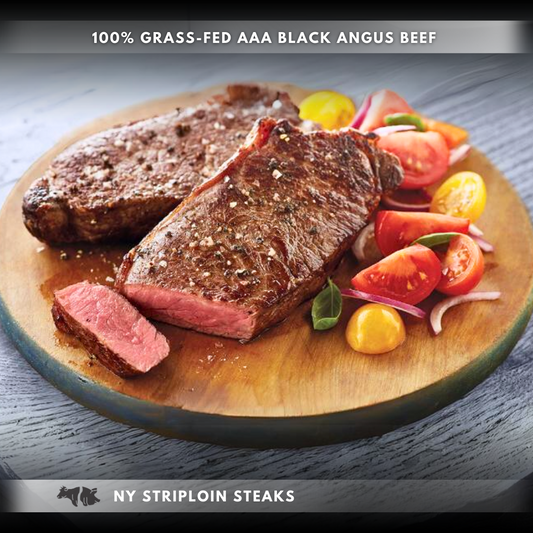
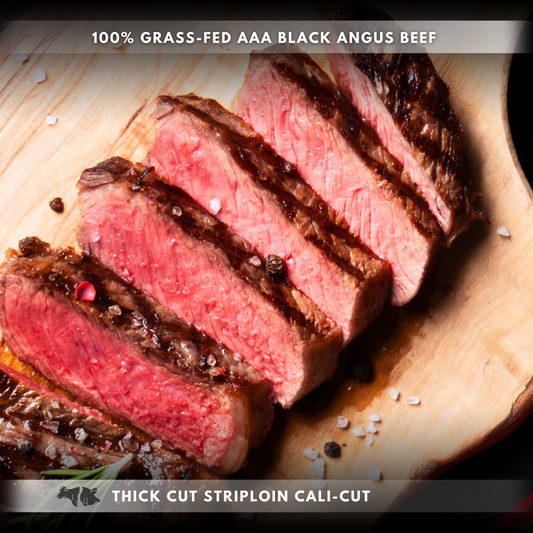
Our 8 oz AAA Black Angus Striploin is 100% grass-fed and provides a good example of the marbling found in premium Canadian beef while retaining the familiar texture and flavour of a traditional steak.
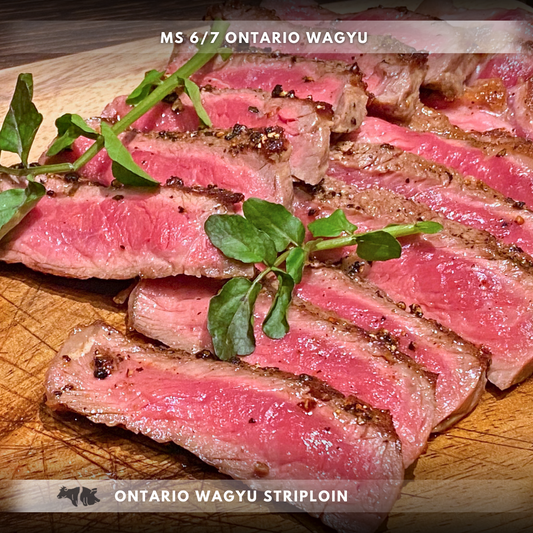
For considerably more visible intramuscular fat, the Ontario Wagyu Striploin BMS 6/7 moves further up the marbling scale. Its BMS, or Beef Marbling Score, gives shoppers an indication of how much marbling they can expect before buying it.
At the other end of the spectrum, our Wagyu Ribeye BMS 9+ has extensive marbling distributed throughout the steak. It creates a much richer eating experience and makes the visual difference between moderate and very high marbling particularly easy to see.
None of these steaks needs to be considered the universally "best" option. Marbling helps define what you're buying. Once you know how to recognize it, you can choose a steak based on whether you prefer something leaner and beef-forward or something exceptionally rich and heavily marbled.